





[신경북뉴스] 주한외국기업연합회(상임대표 김종철, KOFA)는 ‘2025 주한외국기업백서’ 혁신판을 발표하고, 작년 6월 실시한 주한외국기업 급여 및 상여금 실태조사와 함께 복리후생 조사 결과를 포함해 공개했다. 이번 백서는 7년째 발간되는 자료로, 기존 조사 대비 한층 고도화된 분석 체계를 적용해 글로벌 전문 조사기관 수준의 HR 리포트로 업그레이드됐다는 평가를 받고 있다.
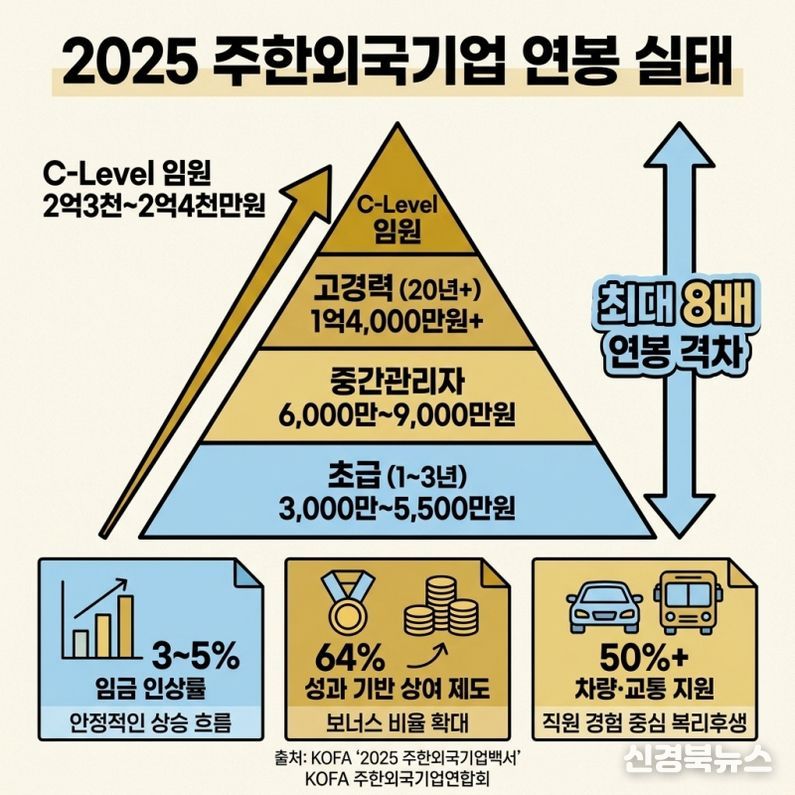
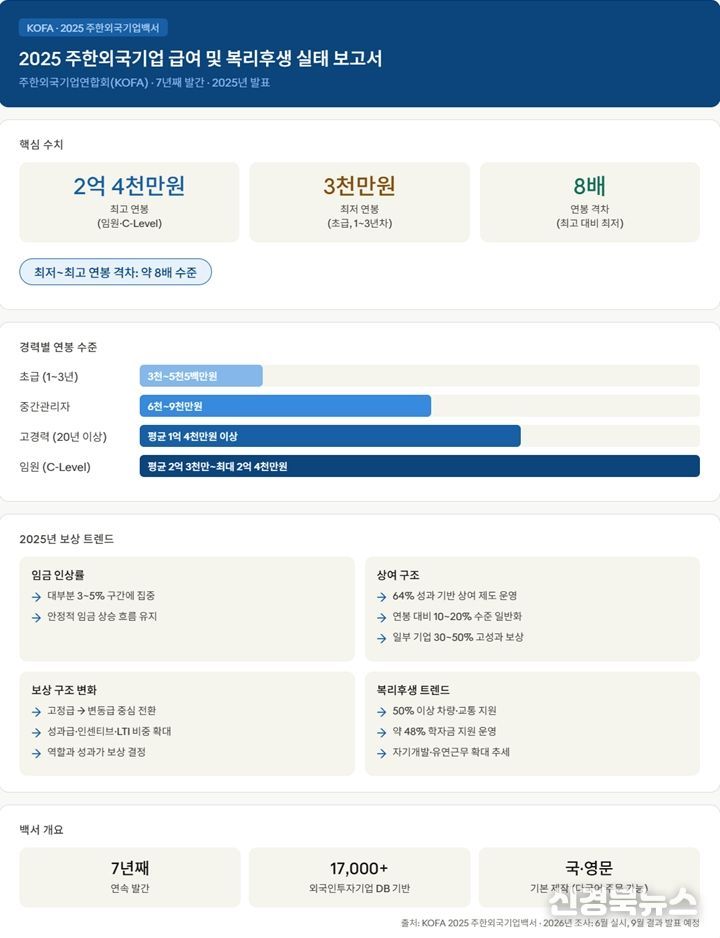
조사 결과에 따르면 외국계기업의 보상 수준은 직무와 연차에 따라 큰 차이를 보였다. 초급(1~3년)의 경우 약 3,000만~5,500만원 수준이었으며, 중간관리자는 약 6,000만~9,000만원, 고경력(20년 이상)은 평균 1억4천만원 이상으로 나타났다. 임원(C-Level)의 경우 평균 약 2억3천만원에서 최대 2억4천만원 수준에 이르는 것으로 분석됐다. 이에 따라 최저 대비 최고 연봉 격차는 약 8배 수준으로 나타났으며, 외국계기업의 보상 구조가 연차와 직무에 따라 뚜렷한 계층 구조를 형성하고 있는 것으로 확인됐다.
KOFA는 “이번 백서는 단순 평균이 아닌 최저·중간·최고값 기반의 구조 분석을 통해 외국계기업 보상체계의 실질적인 분포를 보다 정밀하게 제시했다”고 밝혔다. 2025년 기준 외국계기업의 임금 인상률은 대부분 3~5% 구간에 집중된 것으로 나타났다. 이는 전반적으로 안정적인 임금 상승 흐름을 유지하고 있음을 보여준다. 다만 이번 조사에서 주목할 점은 보상 구조의 변화이다. 과거 기본급 중심의 보상 체계에서 벗어나 성과급, 인센티브, 장기보상(LTI) 등 변동급 비중을 확대하는 방향으로 전환되고 있는 것으로 분석됐다. 이는 글로벌 기업들이 성과 중심 보상 체계를 강화하고 있음을 의미한다.
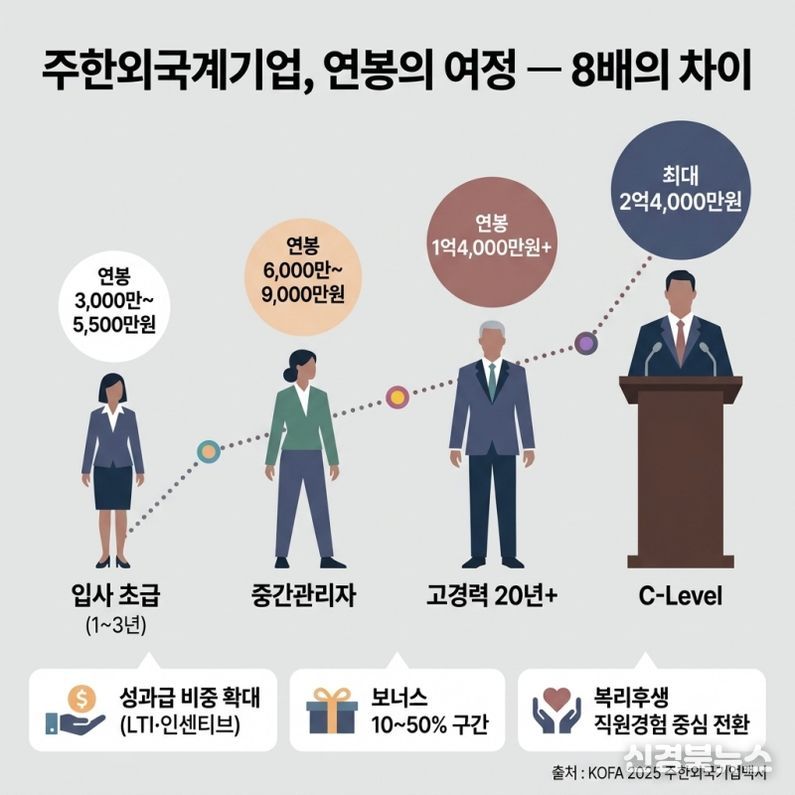
상여 및 보너스 제도에서도 이러한 변화가 나타났다. 전체 기업의 약 64%가 성과 기반 상여 제도를 운영하고 있으며, 연봉 대비 10~20% 수준의 보너스 구조가 일반화된 것으로 조사됐다. 일부 기업의 경우 30~50% 수준의 고성과 보상 체계를 운영하는 사례도 확인됐다. 특히 영업, 임원 및 글로벌 조직에서 성과 보상 비중이 높은 것으로 나타났다. KOFA는 이번 백서를 통해 글로벌 보상 트렌드로 성과 중심 보상 강화, 직무 가치 기반 연봉 체계 확립, 고정급에서 변동급 중심으로의 구조 전환을 제시했다. 이에 대해 “연봉보다 역할과 성과가 보상을 결정하는 구조로 변화하고 있다”고 설명했다.
복리후생 제도에서도 변화가 확인됐다. 차량 및 교통 지원은 약 50% 이상의 기업에서 운영되고 있으며, 학자금 지원은 약 48% 수준으로 나타났다. 또한 자기개발 및 교육 지원 확대, 유연근무 및 근무형태 다양화가 증가하는 추세를 보였다. 이는 복리후생이 단순 금전 지원에서 벗어나 직원 경험 중심으로 변화하고 있음을 보여준다.
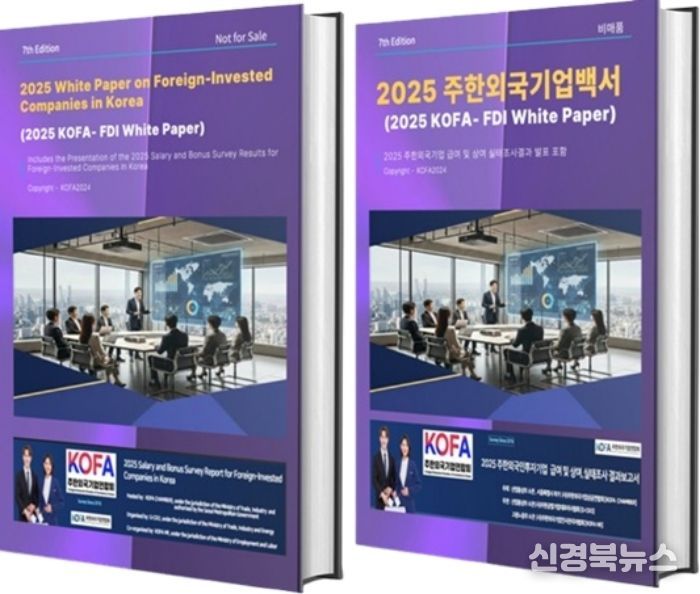
한편 KOFA는 2026년 급여 및 보상 조사를 6월부터 실시하고 9월에 결과를 발표할 예정이라고 밝혔다. KOFA 서베이 담당 공현정 총괄(한국아즈빌)은 “글로벌 기준에 부합하는 데이터 확보를 위해 참여 기업 확대와 조사 정밀도를 지속적으로 강화해 나갈 것”이라고 말했다. 이번 ‘2025 주한외국기업백서’는 책자 및 온라인 자료 형태로 발간되며, 약 1만7천여 외국인투자기업의 DB 기반 정보, 국문 및 영문 근로기준법 업데이트, 2025년 노동 및 HR 이슈, 급여 및 복리후생 조사 결과 등을 포함하고 있다. 해당 백서는 정회원사를 대상으로 무료 배포될 예정이다.
또한 국문 및 영문판으로 기본 제작되며, 필요 시 중국어, 일본어, 프랑스어, 독일어 등 다양한 글로벌 언어로 주문 제작도 가능하다.
주한외국기업연합회(KOFA)는 한국에 진출한 외국인투자기업 CEO로 구성된 산업통상부 소관 (사)주한글로벌기업대표이사협회(GCEO)와 인사담당 임원 및 실무자로 구성된 고용노동부 소관 (사)주한외국기업인사관리자협회(KOFA HR), 그리고 산업통상부 소관 서울특별시 허가 (사)주한외국기업상공연합회(KOFA CHAMBER)를 운영하고 있다. 또한 주한독일. 주한프랑스 , 주한이탈리아, 주한네덜란드, 주한인도등 다양한 외국상공회의소와 협력 네트워크를 구축하고 있으며, 약 600여 회원사 네트워크를 기반으로 산업통상부, 고용노동부, 서울시, 경기도 등과 협력하여 17,000여 외국인투자기업과 정부를 연결하는 가교 역할을 수행하고 있다. 이와 함께 글로벌 취업박람회 및 캠퍼스 리크루팅, HR 급여 및 복리후생 실태조사, 기업 경영 및 HR 데이터 제공 등을 통해 외국계기업 생태계 발전에 기여하고 있다.
[English]
Salaries at Foreign-Invested Companies in Korea Reach KRW 240 Million at the Top and KRW 30 Million at the Bottom… 8-Fold Gap - KOFA Releases “2025 White Paper on Foreign-Invested Companies in Korea” (Enhanced Edition)
The Korea Organization of Foreign Enterprises (KOFA), led by Chairman Kim Jong-cheol, announced the release of the enhanced edition of the “2025 White Paper on Foreign-Invested Companies in Korea”, unveiling the results of its survey on salaries, bonuses, and employee benefits conducted in June last year.
This marks the seventh consecutive annual publication of the white paper. Compared to previous editions, the report has been significantly upgraded with a more advanced analytical framework and is now regarded as being on par with reports produced by leading global research institutions.
According to the survey, compensation levels at foreign-invested companies vary widely depending on job function and years of experience. Entry-level employees (1–3 years of experience) earn approximately KRW 30 million to 55 million annually, while mid-level managers earn around KRW 60 million to 90 million. Employees with over 20 years of experience earn an average of more than KRW 140 million. At the executive (C-level) level, compensation averages approximately KRW 230 million, with a maximum reaching KRW 240 million.
As a result, the gap between the lowest and highest salaries reaches approximately eightfold, indicating a clearly structured hierarchical compensation system based on seniority and role.
KOFA stated, “This white paper goes beyond simple averages by presenting minimum, median, and maximum values, offering a more precise understanding of the actual distribution of compensation structures in foreign-invested companies.”
For 2025, salary increase rates among foreign-invested companies were found to be concentrated in the 3–5% range, reflecting a generally stable upward trend in wages.
However, the report highlights a more significant shift in compensation structures. Companies are increasingly moving away from base salary-driven models toward performance-based compensation systems, expanding the share of variable pay such as bonuses, incentives, and long-term incentives (LTI). This indicates a growing emphasis on performance-driven pay among global companies.
This trend is also evident in bonus systems. Approximately 64% of companies operate performance-based bonus schemes, with bonus levels typically ranging from 10% to 20% of annual salary. In some cases, high-performance compensation structures reach 30% to 50%. Such trends are particularly pronounced in sales roles, executive positions, and global organizations.
KOFA also identified key global compensation trends, including the strengthening of performance-based pay, the adoption of job-based compensation structures, and the transition from fixed pay to variable pay. “Compensation is increasingly determined by role and performance rather than tenure or base salary,” KOFA explained.
Changes were also observed in employee benefits. More than 50% of companies provide transportation or vehicle support, while approximately 48% offer educational assistance. Additionally, there is a growing emphasis on self-development programs, training support, and flexible working arrangements. These trends indicate a shift from traditional monetary benefits toward an employee experience-centered approach.
Meanwhile, KOFA announced that its 2026 salary and compensation survey will commence in June, with results scheduled for release in September. Gong Hyun-jung, Head of KOFA’s Survey Team at Azbil Korea, stated, “We will continue to enhance data precision and expand participation to ensure alignment with global standards.”
The “2025 White Paper on Foreign-Invested Companies in Korea” is published in both print and digital formats. It includes a database of approximately 17,000 foreign-invested companies, updated Korean and English labor law information, key HR and labor issues for 2025, as well as detailed findings on compensation and employee benefits. The white paper will be distributed free of charge to KOFA’s full member companies.
The report is available in both Korean and English, with additional language versions—including Chinese, Japanese, French, and German—available upon request.
KOFA operates several affiliated organizations, including the Korea Global CEO Association (GCEO) under the Ministry of Trade, Industry and Energy, composed of CEOs of foreign-invested companies; the Korea Foreign Company HR Association (KOFA HR) under the Ministry of Employment and Labor, consisting of HR executives and professionals; and the Korea Foreign Business Chamber (KOFA Chamber), authorized by the Seoul Metropolitan Government.
KOFA also maintains close cooperation with various foreign chambers of commerce in Korea, including those from Germany, France, Italy, the Netherlands, and India. With a network of approximately 600 member companies, KOFA serves as a key bridge connecting over 17,000 foreign-invested companies with government bodies such as the Ministry of Trade, Industry and Energy, the Ministry of Employment and Labor, and local governments including Seoul and Gyeonggi Province.
In addition, KOFA contributes to the development of the foreign-invested business ecosystem through initiatives such as global job fairs, campus recruiting programs, HR salary and benefits surveys, and the provision of strategic business and HR data.